
December is the month for year-end reviews. There’s already a deluge of best-of lists for books and movies, but what about plants? I think they deserve accolades, too.
Below, I’ve come up with my personal list of plants that I want more of in my garden. These are five perennial plants that have have proven their mettle and fared well on my property. And because of their stellar performance, I’d like to welcome more of their kind into my garden. They have a few things in common. They are all flowers. They are all in the aster family (the largest plant family). They all do well in zone 7a. They tolerate the local clay soil conditions and while they love sun, they’re also content in part shade. They also support pollinators and put on a good show! What more can a gardener ask for?
Without further ado…
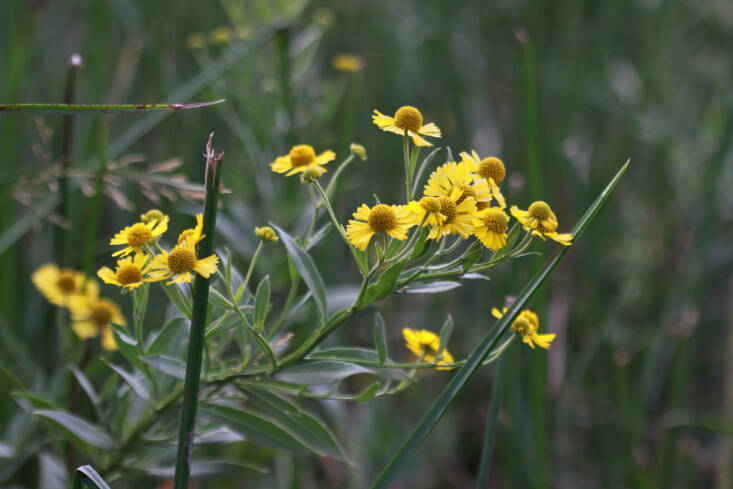
Sneezeweed
Above: Photograph by Andrey Zharkikh via Flickr.
Sneezeweed (Helenium autumnale) has yellow single-petaled flowers that bloom from August to October. A native with a wide North American range in zones 3 to 8, it supports pollinators, is deer-resistant, and can be happy in a rain garden. Mine got a bit too happy, since I forgot the planting adage “sleep, creep, leap.” The first year in the ground, the plant builds roots (sleeps), the second year it switches between roots to top growth (creeps), and the third year, it’s mainly top growth (leaps)! This was the plant’s third year in my yard, and it grew to over five feet—taller than me! Its common name comes from the dried flowers being used as snuff, which is odd, since the plant is toxic to humans. I will divide it in the spring and move it from the front to the back of the bed. (This plant is so self-reliant and fuss-free that it made my list of favorite Low-Maintenance Flowers that Thrive on Benign Neglect.)
Monkshood
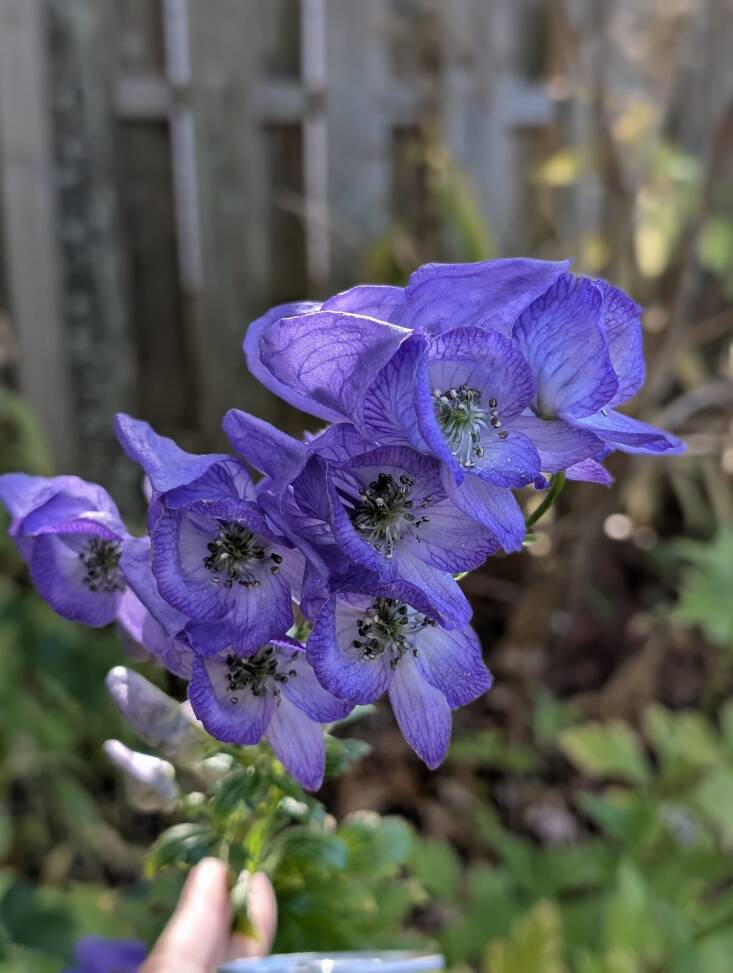 Photograph by Joy Yagid.
Aconitum carmichaelii ‘Arendsii’ gets its common name from the flower’s unusually draping. It blooms from June through September (although mine lasted well into November this year) and can reach a height of four feet. There are native and nonnative varieties. The native variety, A. noveboracense, is on the federal threatened plant list. All the rest are non-native. (I have a non-native variety. Should native seeds be made available to the public, I would try to grow them.) They like full sun to part shade and damp but well-drained areas in zones 3 to 7. Things you need to know before considering this plant: all parts are highly toxic, and it should be grown where children and pets cannot access it. I have a fenced-in yard and no small children or pets. When I had kids, I removed the plant from my garden, but now that there are only adults in the house, I have brought it back. I will divide it and place it along the fence near my rain garden.
New England and New York Asters
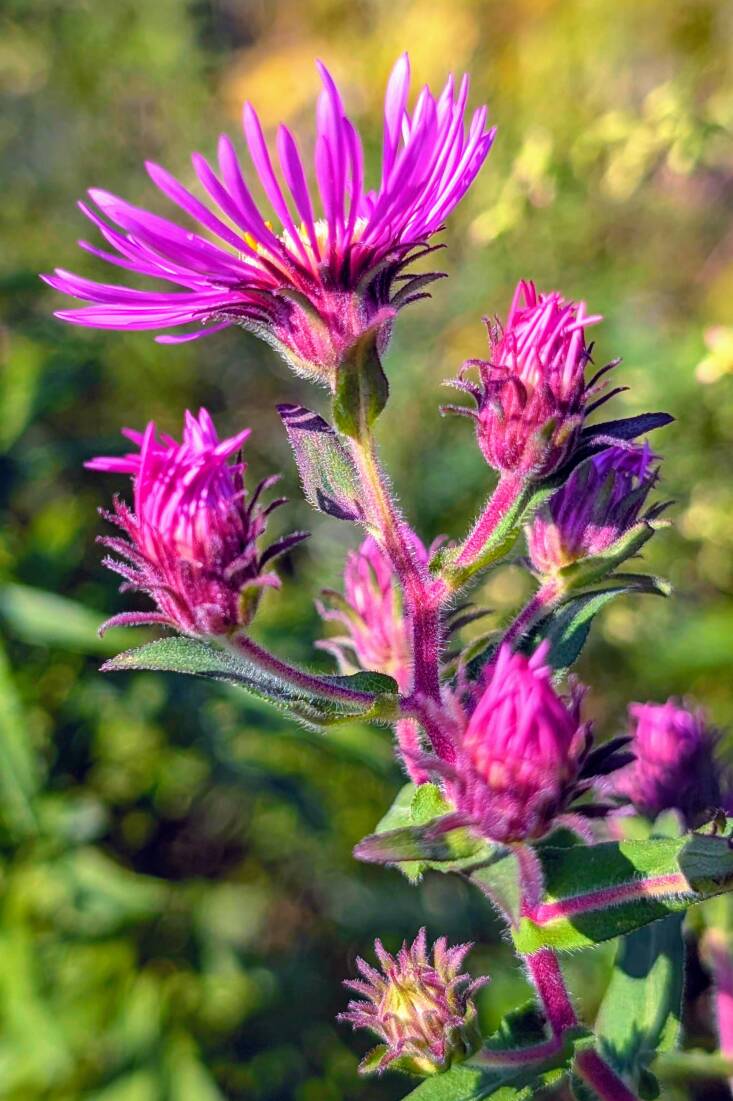
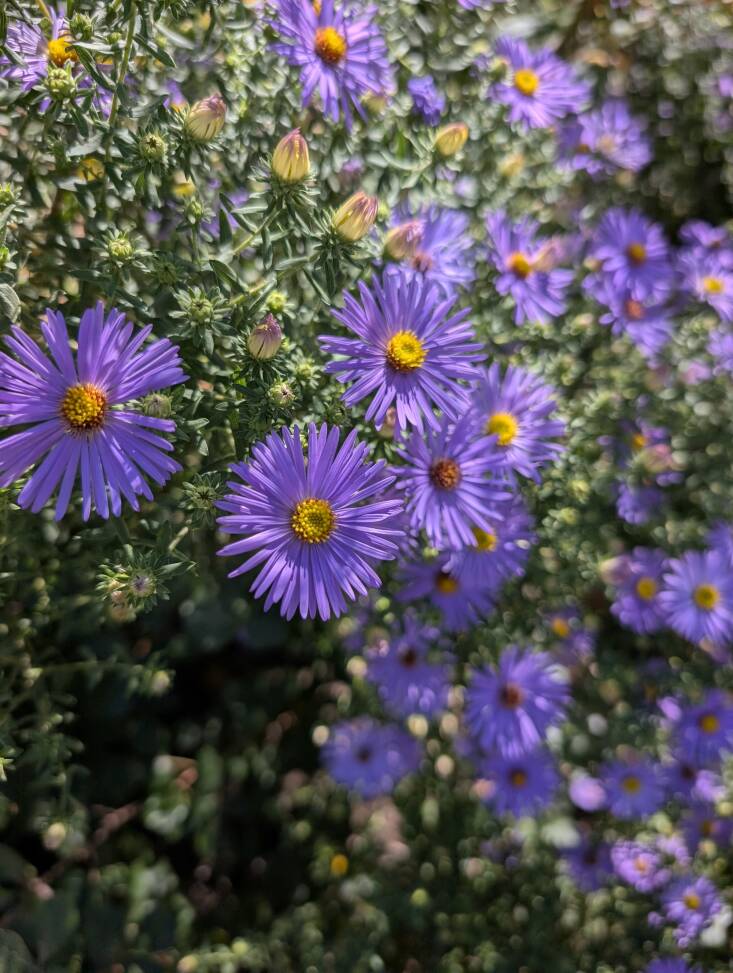
I have a hard time telling apart New England and New York asters (Symphyotrichum novae-angliae and Symphyotrichum novi-belgii). New England asters have thicker stems and purple-pink flowers that can grow to six feet tall; New York has thinner stems and purple flowers that grow to about four feet tall. Both are native to North America in zones 4 through 8, flower late summer into late fall, and last a long time, supporting migrating monarchs and many native bees. These are just fabulous plants—beautiful, pest- and disease-resistant, low-maintenance, and unfussy in a vast range of conditions. I plan to add these along the back fence in my backyard.
Blue Stem Goldenrod
 Photograph by Joy Yagid.
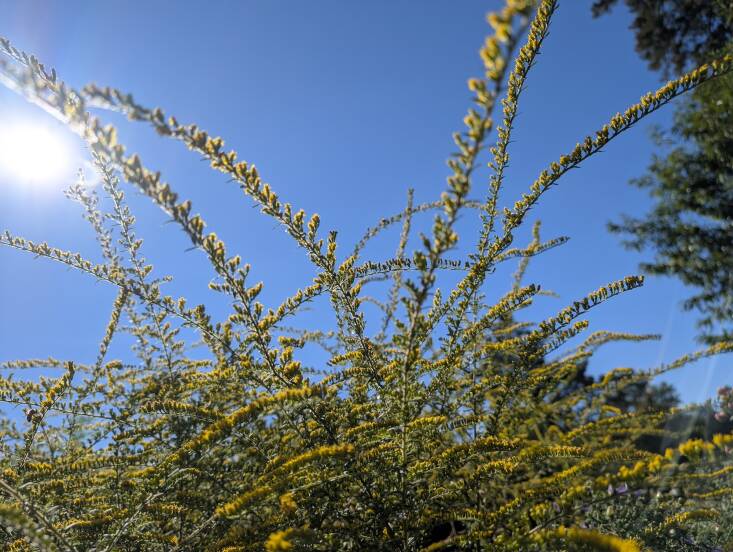
Solidago caesia is such a happy plant, with sprays of golden yellow flowers on bluish stems. Unlike the other tall growers on my list, this one grows to just three feet tall and is perfect as a mid-bed plant. It’s a low-maintenance native plant that tolerates poor soil, shade, and benign neglect. It is also far more well behaved than its goldenrod cousins (looking at you Solidago canadensis) and pretty much stays where you plant it. Blue stem goldenrod blooms in fall and supports many pollinators. I’ll plant more of these near my New York and New England asters. Purple and yellow go great together.
White Snakeroot
 Photograph by Joy Yagid.
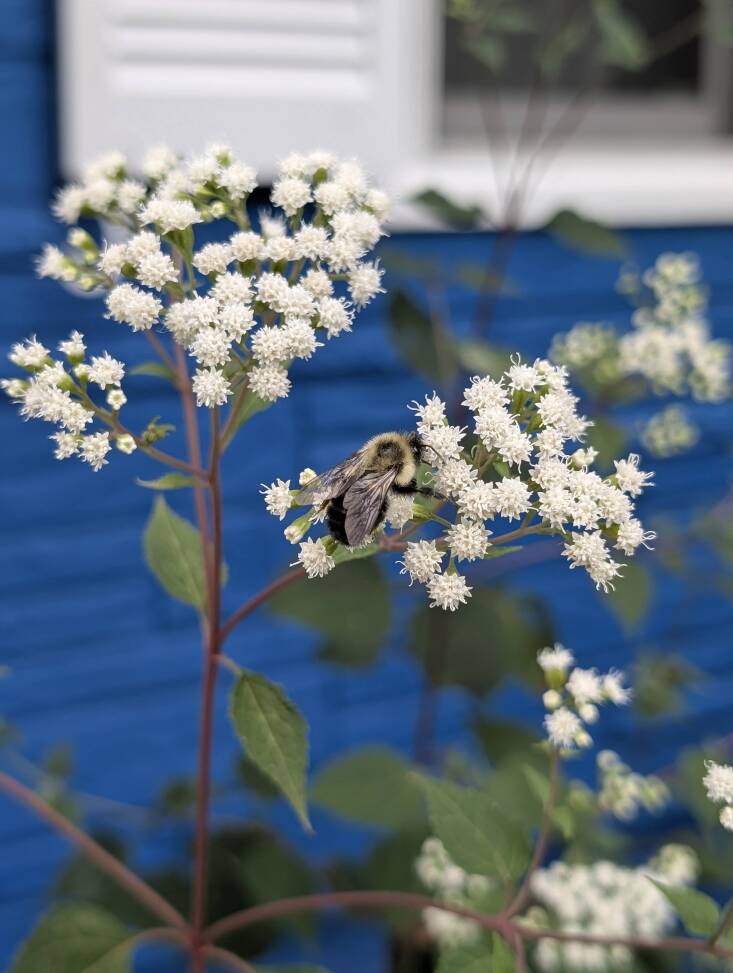
Most people consider white snakeroot (Ageratina altissima) a weed. I don’t. Like blue stem goldenrod, it thrives on neglect. It begs you to ignore it; however, you do need to keep an eye on it. It loves to spread. Another aster family plant, this one has small clusters of white flowers in corymbs and can grow two to feet feet high. It blooms from July through November, giving overwintering insects one last chance to fill up before diapause. I currently have a few in my front yard, and they are striking against my blue house. I will divide them in the spring and add them to my rain garden and in the partial shade in the front beds.
See also: