
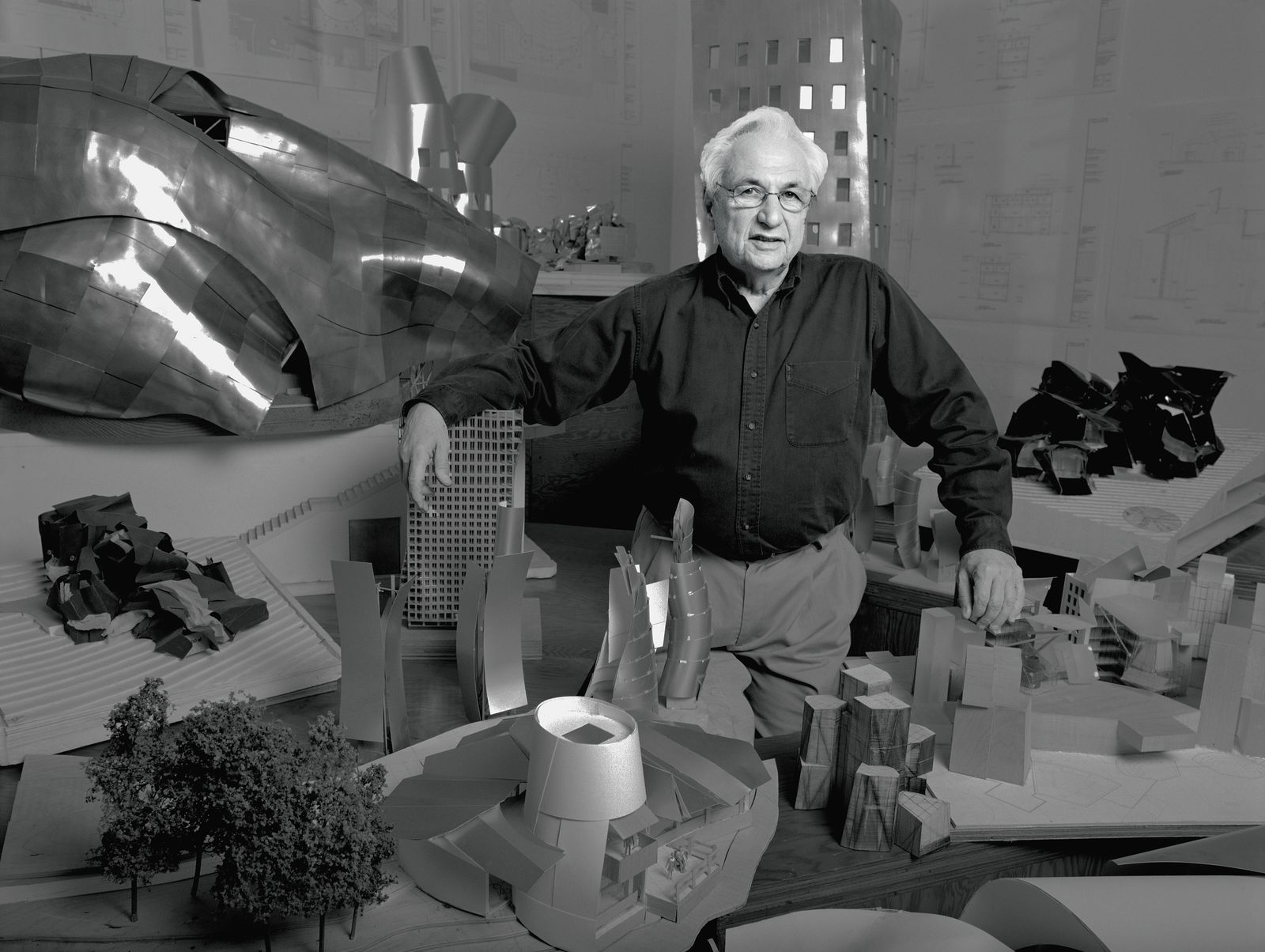
From Bilbao’s Guggenheim to his own Santa Monica home, the first “starchitect” pioneered a deconstructivist style that changed cities—and our idea of what buildings could be.
It’s near impossible to live in Los Angeles and not feel Frank Gehry’s presence. The architect, who died on December 5 at his Santa Monica home at the age of 96, shaped the city in his eccentric, unconventional, and sometimes wacky view. As a former L.A. resident of 15 years, I remember taking my parents to his sensationally sculptural Walt Disney Concert Hall, where we gazed on its reflective contours against a bright blue California sky; my dad, a home builder who wanted to be an architect, made one of his best pictures of the building his iPhone background. On another occasion, I watched as a friend gracefully danced a site-specific contemporary piece on its steps. When I visited Los Angeles more recently, I noticed the evanescent quality of the building’s silvery waves through the floor-to-ceiling window of my hotel room, inside The Grand LA, also designed by Gehry.
Most will know Frank Gehry for his public-facing works, perhaps most notably the Guggenheim in Bilbao, a titanium-plated museum with a compelling sense of movement that has come to symbolize the city’s late-’90s revival. This groundbreaking civic work and others were made possible by digital modeling software, which Gehry adopted early on to expand on his deconstructivist style, where he pulled apart and distorted conventional ideas of what a building should be. But whether transforming municipalities with daring structures or experimenting with single-family homes, over the course of his half-a-century-long career, the Pritzker Prize–winning architect put people, delight, and playfulness at the forefront of his some 70 projects, which made him revered within architecture circles as well as a household name well outside of them.
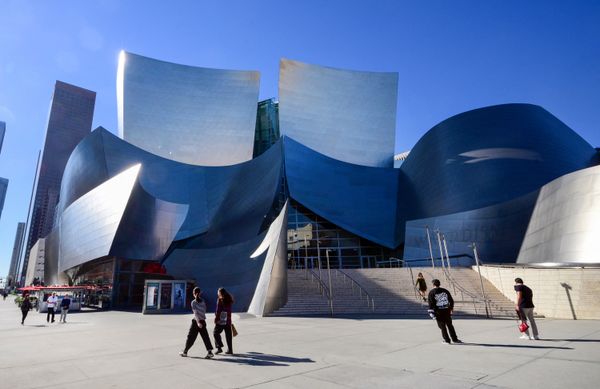
With the Walt Disney Concert Hall in downtown Los Angeles, opened in 2003, Frank Gehry experimented with monumental, swooping shapes clad in stainless steel.
Photo by Frederic J. Brown / AFP via Getty Images
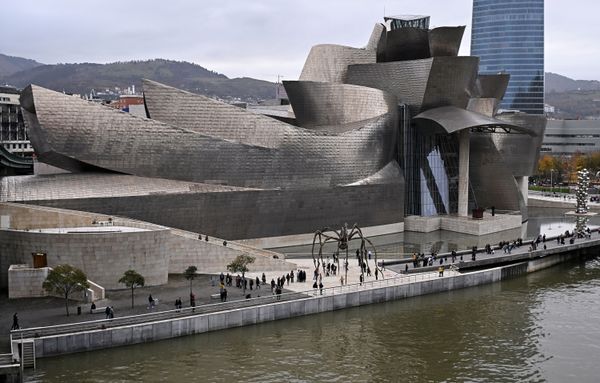
The Guggenheim in Bilbao, with its gleaming titanium facade, is an emblem of civic renewal for the city. After it was built, Gehry-designed buildings became trophies for towns. His civic works also became templates for cities around the world, who introduced eye-catching museums by other architects in a bid for international attention.
Photo by Ander Gillenea / AFP via Getty Images
After immigrating to Los Angeles with his family in 1947, Gehry earned a degree in architecture at the University of Southern California in 1954, before serving in the U.S. Army for two years, where he designed furniture for soldiers. He then studied urban planning at Harvard’s Graduate School of Design before returning to Southern California, where he remained a lifelong resident of a region that, over many decades, became an evocative portfolio for his work.
It includes the David Cabin, Gehry’s first built work, a residence completed in 1957 in Idyllwild, east of Los Angeles. The cabin melds Frank Lloyd Wright’s Usonian ideas—specifically how a home should relate to nature —with Japanese references, and a palette of off-the-shelf materials including redwood siding, corrugated metal, and chain-link fencing that foretold a lifelong fascination with the raw, mundane, and not traditionally “beautiful.” These choices were rooted in Gehry’s past, too: As a youngster he worked part time in his grandfather’s hardware store, stocking shelves with some of the same everyday items used to build the cabin.
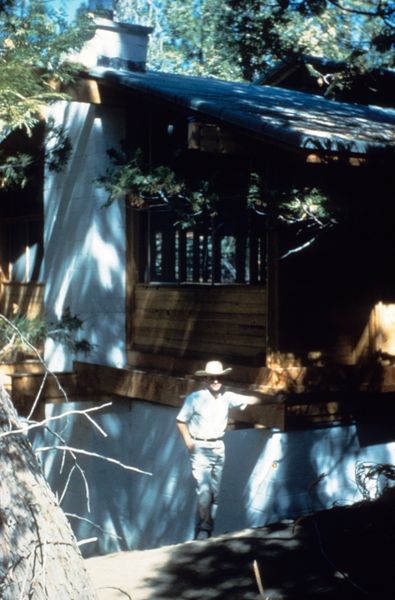
The David Cabin in Idyllwild, California, completed in 1957 for a neighbor of Frank Gehry’s wife’s family, is the architect’s first built design.
Photo © Frank O. Gehry. Getty Research Institute, Los Angeles
See the full story on Dwell.com: How Frank Gehry Became a Household Name
Related stories: