
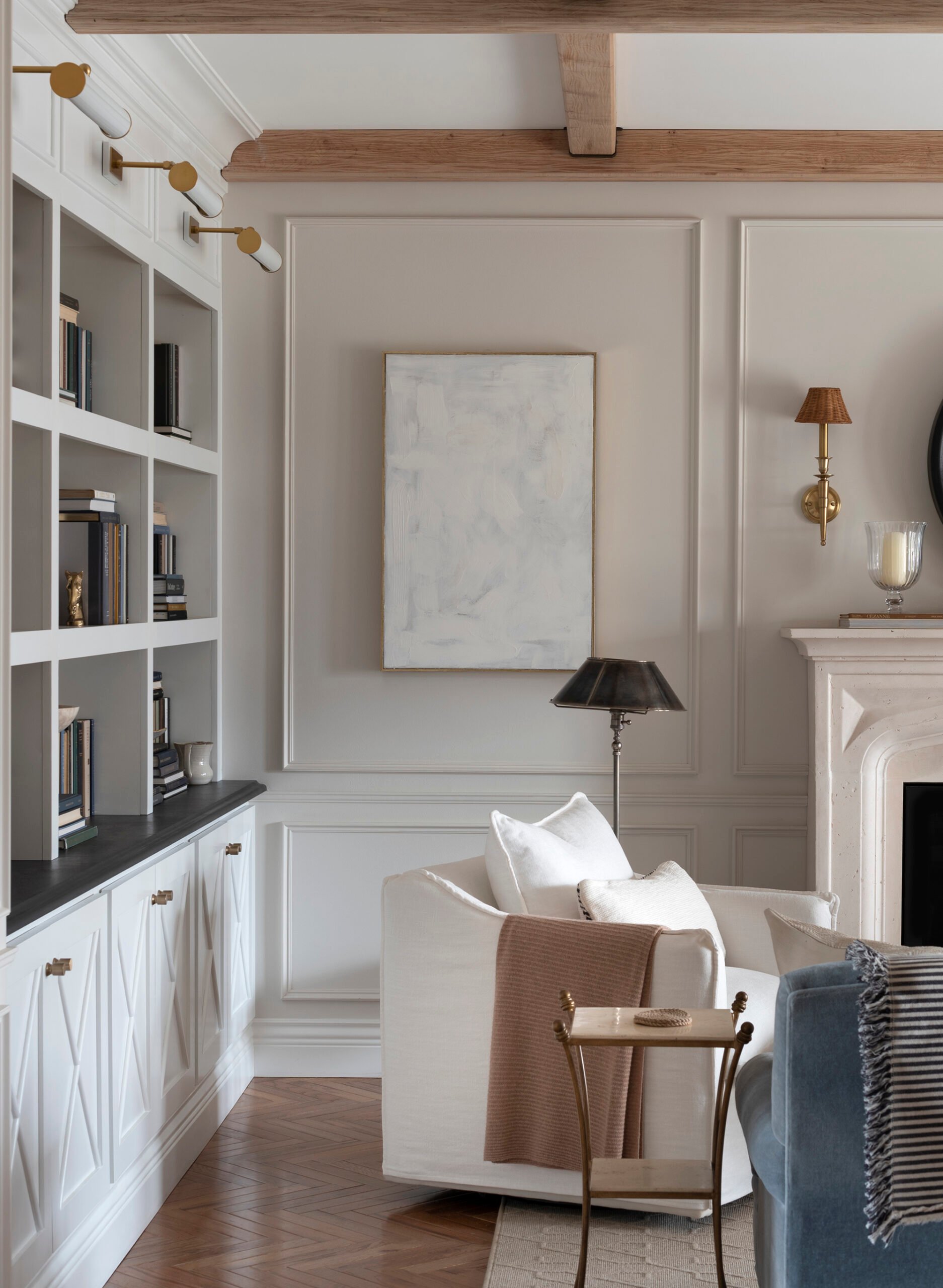
Architectural details often make the biggest impact, even when they’re subtle. Wall trim, baseboard style, and the overall profile of the millwork you choose, has a quiet way of elevating a room, adding dimension, balancing proportions, and helping your entire home feel more intentional. If you’re unsure where to begin or how to choose the right trim style for your home, this guide breaks down everything I consider during my own projects.
This particular topic has been on my mind, as I’ve been deep in design plans for our cabin. I have to order doors this week, so I’ve been sorting and specifying millwork profiles… which are simplistic, given it’s a rustic cabin. Regardless, these are questions I receive often, so I hope this detailed post proves helpful! If you’re curious about our current home, check out this post on how to select millwork profiles, along with the trim I chose.
Why Pay Attention to Millwork?
Trim is a powerful design tool. Even the simplest profile can make a room feel more finished and thoughtful. It frames your space, brings structure, and adds character that paint or furnishings alone just can’t. Anytime I walk into a home, the trim tells me a lot about the style, architecture, age, craftsmanship, and the overall story of the space.
If you’re unsure where to start… baseboards and crown moulding are both approachable additions that offer a high impact without having to budget for a full remodel. It’s one of the easiest and affordable ways to add charm to a basic builder-grade home or enhance the architecture you already have. Let’s dive in!

Start with Your Home’s Architecture
Before browsing profiles or scrolling inspiration, take inventory of what your home naturally leans toward. Does it feel traditional, transitional, modern, or historic? From there go deeper… is your home a craftsman, bungalow, victorian, or perhaps it has a colonial style? Your architectural style should guide your trim decisions so everything works together. A more classic home might benefit from detailed or layered profiles. A modern home typically looks best with clean, simple lines.
Even if you love mixing styles, keeping your trim anchored to the home’s architecture helps everything feel intentional rather than disjointed. That’s always my starting place when selecting millwork profiles!

Choose a Profile That Fits Your Style
Trim comes in endless shapes and silhouettes. Here are some quick base style examples I grabbed from Metrie (so you can get a feel for profile aesthetic) and general rules I refer to when making millwork selections…
Modern and Minimal
Square edge, craftsman, or subtle ogee profiles. These feel crisp and contemporary without competing with the rest of your design.


Classic and Timeless
Colonial, ovolo, or stepped silhouettes. They work beautifully in traditional homes or any space where you’re trying to add classic warmth and character.


Elegant and Detailed
Think multi piece baseboards, panel moulding, and ornate options. These details shine in formal rooms, historic homes, or spaces where you want defined character.


Get Proportion and Scale Right
Proportion is everything with it comes to millwork. There are a couple helpful formulas you can use, but I typically trust my eye and look to the rule of thirds to make sure everything feels balanced. One of my favorite books is, Get Your House Right, goes into greater detail about this. Otherwise, here are some quick pointers… these aren’t rules you have to follow exactly, but they’ll help you land in the right neighborhood.

Use Ceiling Height as Your Anchor
Baseboard height should be roughly one tenth of the ceiling height. It’s not rigid, but it gives you a great starting point. Here’s how that typically shakes out:
- 8 foot ceilings look best with 5 to 6 inch baseboards
- 9 foot ceilings can handle 6 to 7.5 inch baseboards
- 10 foot ceilings look balanced with 7 to 9 inch baseboards
- Anything taller than 10 feet can comfortably move into the 9 to 12 inch range

Lean into the Rule of Thirds
This is where I rely on proportions rather than measurements. Instead of fixating on exact inches, look at the wall in three equal horizontal sections. Your wall trim should visually live within that lower third. If it feels too tiny or gets lost against the wall, it’s probably undersized. If it creeps too high and interrupts that lower third, it might be overpowering the room. The rule of thirds keeps everything feeling harmonious, even if the actual measurements vary slightly. This principle applies when installing chair rails, panel moulding, or wainscoting. Breaking the wall into natural proportions always results in a more balanced look.

Coordinate Trim with Doors and Windows
Baseboards and casings should feel related. They don’t need to match perfectly, but they should support each other in scale. A few helpful notes…
- Casing usually looks best when it is slightly smaller than the baseboard.
- Taller baseboards anchor the room and create a grounded feeling.
- Taller casings draw attention upward and highlight architectural features.

Match the Style to the Scale
As we already discussed, your home’s architectural style also plays a role. Modern and minimal spaces tend to look best with slimmer, cleaner lines. Traditional or historic homes can handle more height, layering, and detail. Choosing a scale that matches the style helps the trim feel like it belongs to the house rather than being added later.

Create Cohesion Throughout Your Home
Your trim doesn’t need to match room to room, but it should relate. I like to keep baseboards consistent across the entire house for continuity, then layer in coordinating wall trim styles where it makes sense. Dining rooms, entryways, stairwells, and primary suites are great places to incorporate more decorative molding. Consistency makes the home feel connected, while variation adds depth and personality to each room.

Paint and Finish Considerations
The paint color and finish you choose will highlight your millwork profile. Check out my designer guide for choosing the best paint sheen or finish! Satin and semigloss are durable options that subtly reflect light and showcase the profile. Crisp white trim is always timeless, but don’t overlook tone-on-tone walls and trim for a softer, color drenched look. Darker, contrasting trim can also add drama and depth that feels very tailored.

Millwork FAQ
Great question… yes, they should look cohesive. I’ve got an entire post on that: How to Order & Replace An Interior Door (With Designer Recommendations).
Yes, and no. Keeping base and crown consistent is a great idea for cohesion, but you can mix wall molding styles strategically throughout the home.
Most homes do well with five to seven inch baseboards. Higher ceilings can handle even taller profiles. When in doubt, size up… if you’re debating between two sizes, choose the taller option. Undersized trim is one of the first things that makes a room feel builder basic. A slightly larger baseboard or profile almost always feels more intentional and custom.
It depends on the architectural style and aesthetic of your home, but it’s an easy way to add depth and character. I shared our complete process here… how to install panel moulding: a step-by-step guide.
Ceiling medallions! I love adding those to draw emphasis upward to beautiful fixtures… definitely underrated. They’re easy, too! Here’s how to install a ceiling medallion, if you’re interested.

Related
Looking for more ideas and designer tips on millwork, doors, and cabinetry? I’m going to link some favorites for you below!
- How to Install a Ceiling Medallion
- Overlay vs Inset Cabinets: What’s Best for Your Kitchen
- How to Replace & Upgrade Your Cabinet Doors
- Selecting Interior Doors & Hardware Style
- How to Paint a Door
- Ideas for Customizing a Kitchen Island Or Cart
- Cabinetry Hardware Placement Guide (With Easy Examples)
- Your Millwork Questions Answered (a Q&A)
- Perfectly Smooth Walls: A Skim Coating Tutorial
- 12 Designer Tips to Make Your Ceiling Look Taller

Selecting the right wall trim and baseboard style are one of those design decisions that can definitely feel overwhelming, since there are so many options. I hope this post was helpful! When the proportions feel right and the profile echoes your home’s architecture, everything just flows and looks well designed. Trim sets the tone and frames the spaces you live in every day, so I’m a big believer in millwork. Feel free to leave any questions for me in the comment section below!
The post How to Choose the Right Wall Trim and Baseboard Style for Your Home appeared first on Room For Tuesday.