
A liberal think tank wants to capitalize on the simple messaging of “build baby build” by providing money to an often overlooked group in housing shortage debates.
We love a straightforward, simple strategy; a meme-able sound bite or a size-16-font headline that tells us, exactly, how we might solve the housing crisis. 3D-printed homes, modular housing, or more recently, New York City’s mayor elect’s campaign promise to “Freeze the Rent” have captured Americans’ limited attention to uncomplicated fixes. Of course in reality, these supposedly straightforward solutions would require a whole host of bureaucratic moves to make them actionable and effective: 3D-printed homes would be great, but building codes might need to be adjusted. Freezing the rent in New York is attainable, but per City Journal, requires appointing the right people to the Rent Guidelines Board who will need to weigh factors like inflation, taxes, and more. Complexity has become the enemy of electability. Want to end a family holiday debate over the housing shortage? Bring up land use policy and watch as your uncle’s eyes glaze over.
The housing supply problem is indeed complex: At the local level, issues like land use, zoning, design review boards, building codes, and more color the difficult process of building housing across different jurisdictions, requiring solutions more than one-liners. Last week, the Center for American Progress (CAP), a liberal think tank, released their own playbook for housing policy that hopes to capitalize on simple messaging, averting the eyes-glazed-over reaction typical when policymakers speak to actionable housing policy solutions. In their words, they simply want to “build, baby build.” And one of their key recommendations to get more people on board with this plan involves appealing to renters, a group that is often overlooked in housing shortage debates, by speaking a language that working people can get behind: cold hard cash.
According to Michael Negron, a senior fellow at CAP who co-authored the housing report alongside Jared Bernstein (the former chair of President Biden’s Council of Economic Advisors) and director of economic analysis Natalie Baker, their “Build Baby Build” report is rooted in a supply-demand problem. “We’ve been under-building, particularly after the financial crisis, to the point that there was a serious mismatch between demand and supply,” he explains. The authors believe that the federal government has a role to play in relieving the high cost of housing by getting more homes built.
The report details ideas to ramp up innovation in housing and using federal dollars to scale up deployment, but key to their strategy is in removing local bureaucratic obstacles like zoning and land use reform. The premise isn’t new: This was also a strategy deployed by the Biden administration; in her presidential bid, vice president Kamala Harris also proposed a $40 billion fund to “empower” those local jurisdictions to find ways to build more housing, including cutting regulations that make it more difficult to build. The New York Times critiqued this plan, saying, “[For] that to work, cities…have to want to change how they grow, which so far many are reluctant to do.”
Much of that reluctance comes from voters—especially homeowners—who notoriously oppose new construction, congregating at community and zoning board meetings as an organized coalition against new housing. It’s a strange phenomenon detailed by Jerusalem Demsas in her 2024 Atlantic article, “Housing is Breaking People’s Brains.” In it, she analyzes a recent study of urban and suburban residents’ attitudes toward new construction, which found that “30 to 40 percent of Americans believe, ‘contrary to basic economic theory and robust empirical evidence,’ that if a lot of new housing were built in their region, then rents and home prices would rise.” Though plentiful evidence exists otherwise in places like the Sun Belt, the false belief may be mobilizing individuals to fight against much-needed housing.
Rather than inducing cities to remove zoning and land use barriers and allowing local politicians like city council members to navigate opposition, CAP is instead hoping to mobilize renters through a program called Rent Relief for Reform (R3). They recommend identifying Housing Cost Crisis Zones (HCCZs), or “jurisdictions where rents are exceptionally high or rising rapidly and where housing supply has failed to keep pace with demand.” The federal government would then create “affordability contracts” between the department of Housing and Urban Development and those HCCZs that would set new housing supply targets. If cities meet those targets, the federal government will provide those cities with resources to issue rent rebates to residents.
The rebates are to “help with the politics while we wait for the benefits of home building,” he says, by providing, “an effective [rent] freeze as more units are built.” The relief payments would be temporary, but the CAP report states that the payments—between $640 and $860 annually in Los Angeles, for example—would also reflect the potential reduction in future rents if building targets are met. As a cash incentive, however, Negron hopes that it could help bring renters, which encompass more than one-third of the U.S. population, to participate in zoning and community meetings.
“Who’s at those community meetings? It’s often homeowners in the area who just don’t want to see anything get built. How do you get that meeting where more folks in the community are there because they feel they have some skin in the game? Have more renters show up,” says Negron. “I think one of the motivators of this is how you create that political calculus for elected officials to see the political upside of building, because all these people showed up and they think that, under this program, they’re going to get some real benefit if we build more.”
Perhaps the future of Democrat housing plans is pivoting toward “abundance“—a theory that hinges on building more housing, transportation, and infrastructure—at a time when Republicans are doubling down on their own simple solution to the complex housing problem: deportation. As Vice President JD Vance has repeated since the 2024 campaign trail, most recently on Fox News’s Sean Hannity earlier this month, “we flooded the country with 30 million illegal immigrants who are taking houses that ought, by right, to go to American citizens.” They’ve brought their plan to action through executing mass deportations in cities like Los Angeles and Chicago, sometimes sending immigration and customs enforcement officers to Home Depot to kidnap construction day laborers.
While their ‘simple’ message of deportation might have appealed to some, the CAP study notes that our supply problem is exacerbated by Republican immigration policies, echoed by recent surveys. NPR reported this month that 92 percent of surveyed construction firms struggled to find workers this summer, and 28 percent of those said they were impacted by immigration actions. Their housing plan could then result in building less. “It is true that the Trump Administration had some success in lying about the causes of housing affordability by blaming undocumented immigrants, but now that President Trump is in office and implementing his mass deportation policies, with affordability only getting worse, the public is beginning to see through these falsehoods,” says Negron. “Build baby build” has its own complications and complexities, but getting rental relief into the pockets of residents hardest hit by the affordability crisis is digestible to our most disengaged voters—perhaps enough so to spark its own movement.
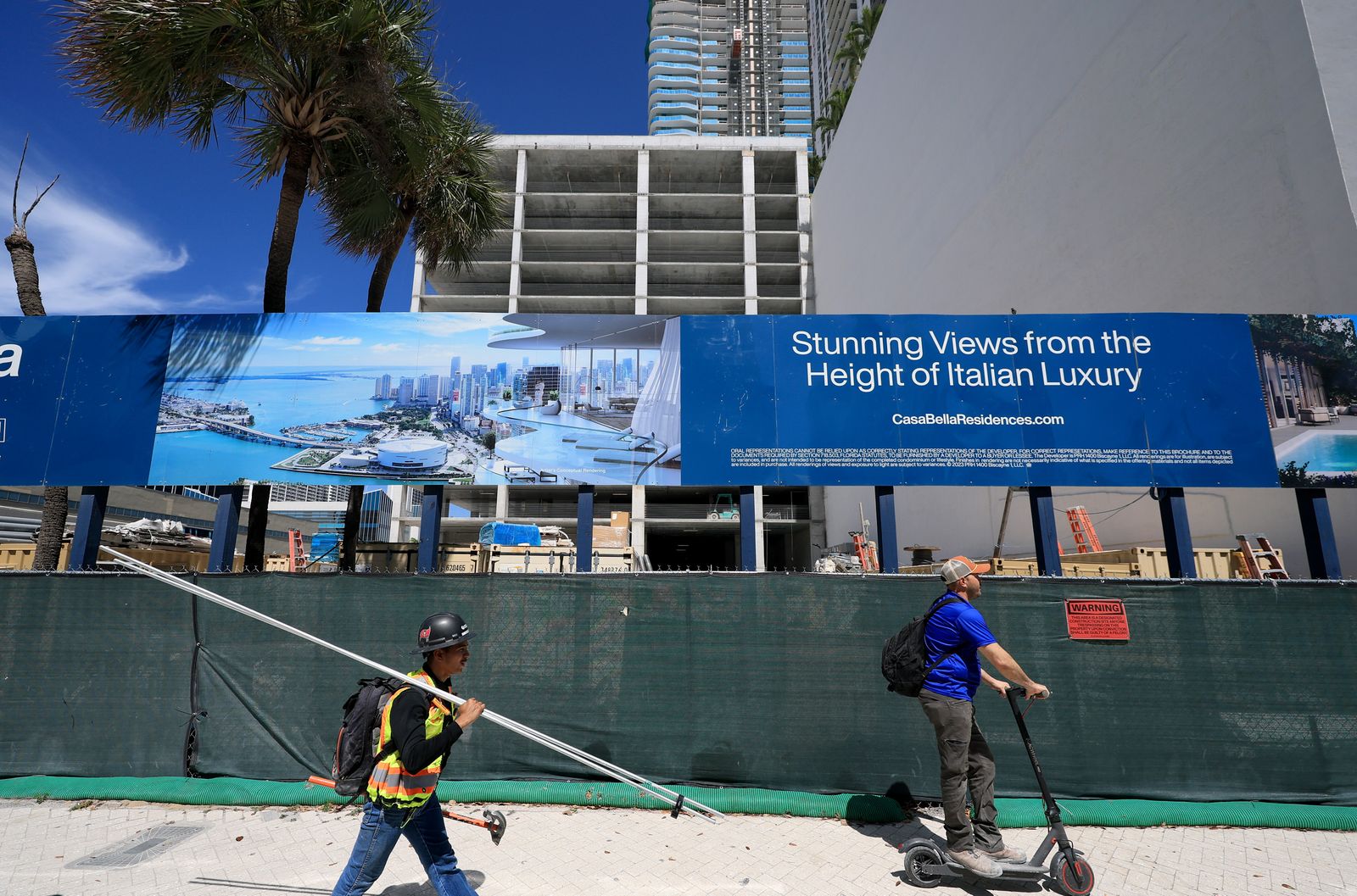
Top photo by Joe Raedle/Getty Images.
Related Reading:
The Case for Old-Looking, New Affordable Housing
Why It Matters That the Trump Administration Is Declassifying Architects as “Professionals”