

Homeware brand Lazy Jamie’s new take on the midcentury furniture staple packs a punch of history in its design and fabrication.
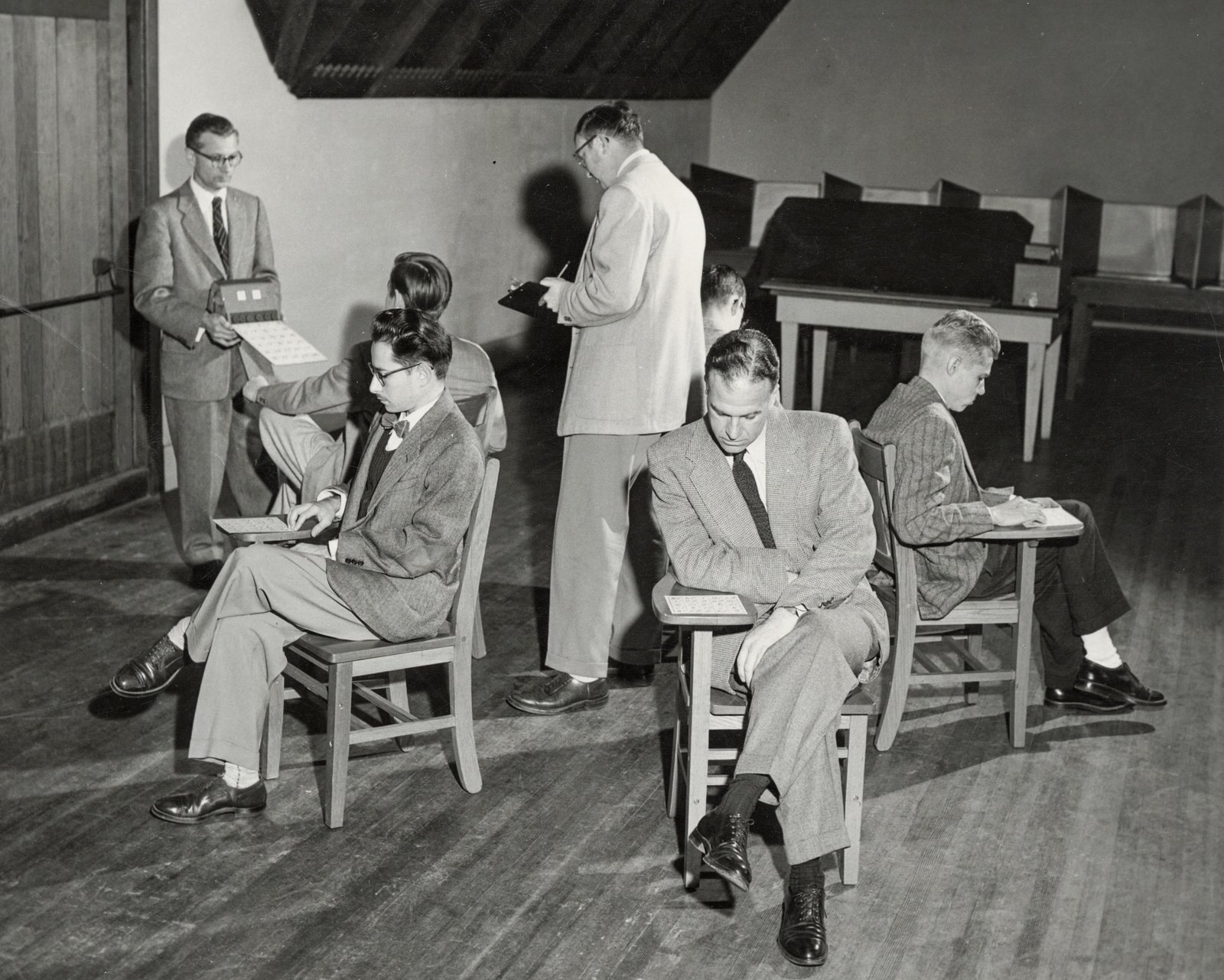
The American midcentury still has its hold (chokehold, some might say) on contemporary culture, and furniture is one of its biggest exports. There are the classic pieces that anyone can visualize—the Eames chair, of course—and then there are the less exalted but still famous, like an image of a family lined up, eyes glued to the boob tube as they each consume their own microwaved dinner, placed precariously on an individual folding table that would come to be known as the TV tray. People may watch television while eating dinner all over the world, but somehow, there is little that feels more stereotypically American.
In recent years, as a computer-dependent lap life has taken over—to say nothing of bed trays—the TV tray has seen a resurgence. The early years of the pandemic saw a rise in purchases of them, according to the Wall Street Journal, which would track in the ways Covid reshaped many peoples’ home lives (see: work-from-home culture, and the panic over where one’s desk lives). So homeware brand Lazy Jamie’s new foray into the space comes at an opportune moment—a telling reminder that much of the furniture we know and love is a mere tweak of a previous idea on its way to genius. The brand’s founder, Jamie Lenore McKillop, says she was inspired to make a fresh take on a classic by her grandmother’s TV trays, but wanted the piece to be more accessible to a world in which the dining room has fallen out of favor.

From left: Image by Jeffrey Coolidge via Getty Images; image via the Ronald Reagan Presidential Library and Museum, National Archives and Records Administration
This is a dramatic time in the story of American manufacturing, one that Lazy Jamie’s 5-9 TV Tray Table fits neatly into as well. When I first caught wind of it, I was already in the market for a piece like it, and something that didn’t have to be shipped from overseas is always a go-to for me. I needed a smaller, more mobile replacement for my large glass coffee table, which had been perfect for my last square living room, but no longer worked in my longer, skinnier one—and of course, something I liked looking at. For the past year plus I had been sifting through options, most consistently coming across the cousin of the TV tray, the sofa end table, or drink table as they’re sometimes called. But most seemed too small or with sharp corners not ideal for a household with a child whose eyes hit low. So when the brand agreed to send me a sample of their latest product to check out, I found myself entering an accidental exploration of where American furniture making is today.
Lazy Jamie 5-9 TV Tray Table
We’ve updated a nostalgic classic for the way you actually live—because no one with a night to themselves is sitting in silence at a dining table. Swirl base slides under couch or around corner Includes removable butler tray attachment Accommodates place setting or laptop Low profile edge for eating and work Made in USA 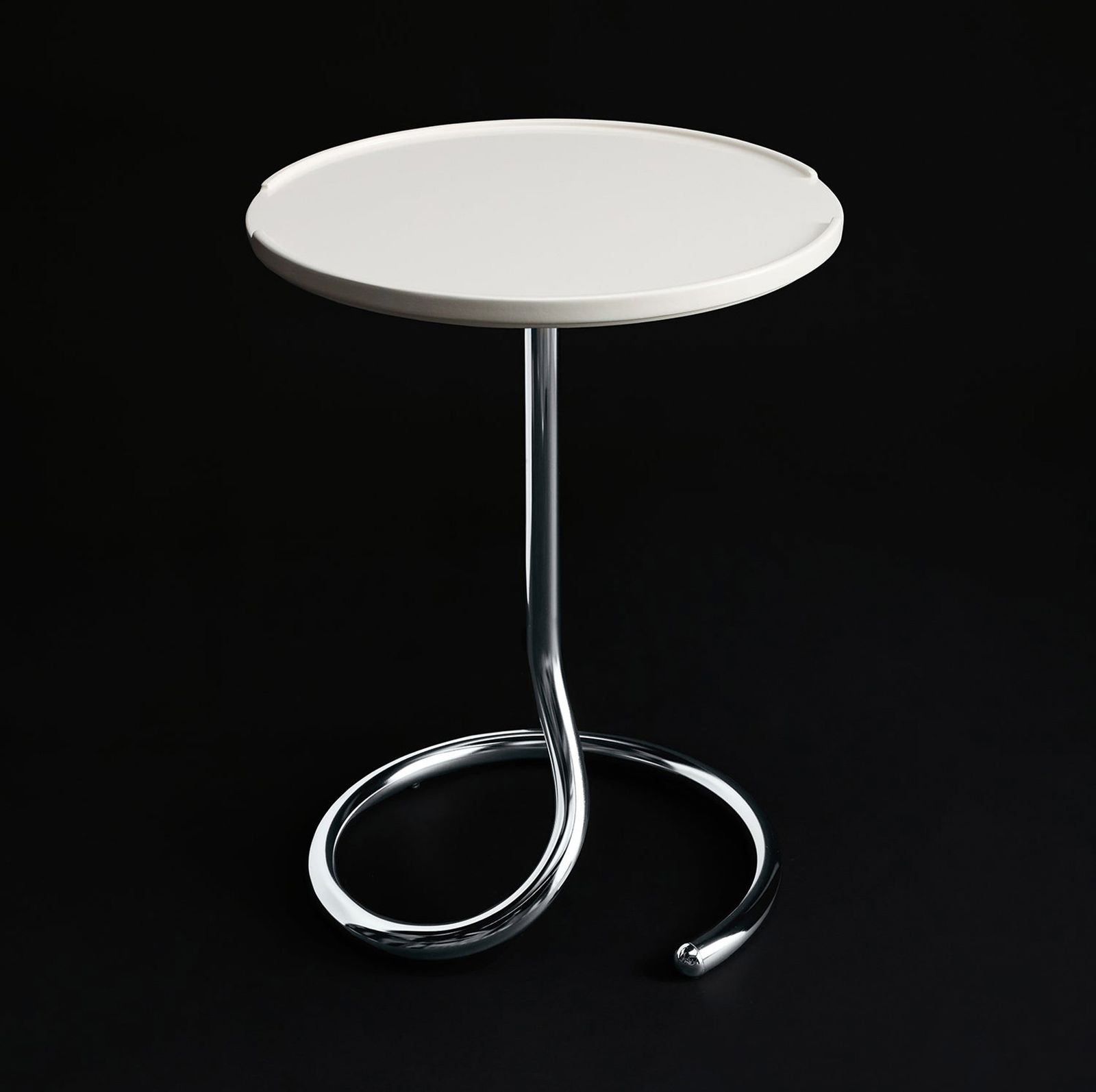
The 5-9 TV Tray Table, priced at $546, comes in a deep blue or off-white, with a chrome base and tops made of powder-coated medium-density fiberboard (MDF) and high-density fiberboard (HDF)—a decision McKillop said in an interview was made to give it a “lacquer-like depth,” given that “color is such an important part of the brand” (and her own home). The feature that is unique is the butler tray that lifts off the top, giving you essentially two tables in one. Unlike the original TV tray, which folds up, or the drinks table, which often slides over the arm of a sofa, this piece—depending on the height of the rest of your furniture of course—is the table version of “get you a man who can do both.”
While the McKillop says it was designed and marketed with solo use in mind, the fact that the table and the tray detach actually opens up your dining options, allowing for one person to use the table and the other to use the tray on a lap. It’s been a huge upgrade to my previous default of putting drinks on the floor while I eat, only to have to reach down for them or accidentally kick them (to say nothing of balancing a glass on the sofa itself), or sitting cross-legged on the floor for particularly messy meals. (Not to mention that the blue is a perfect compliment to my sofa.)
But once I took a closer look at the product description, it was the materials choices McKillop made that I was most curious about; all parts are made in the U.S., in Wisconsin, Colorado, Minnesota, and Michigan, to be precise. That’s not an accident, explains McKillop, even if manufacturing in different factories in multiple states isn’t ideal. The stainless-steel tableware Lazy Jamie started with was in many ways the “soft launch” of the brand, and she says selling it allowed her to put that capital back into creating this first furniture piece, an indication of how much she believes in its cultural grip.

From left: Photo by H. Armstrong Roberts/ClassicStock/Getty; photo by William Gottlieb/Corbis via Getty Images
“Finding the manufacturers for the TV trays, that took me three years,” McKillop says. “It was basically one step forward, two steps back…a constant process of trying to find people that were willing to work with me because I was such a small business, and my order volumes, compared to these big commercial volumes, for them, they’re basically doing me a favor by taking on my order.” Working in the U.S. was actually a decision she made years before President Trump’s erratic tariff choices plunged the home goods market into disarray, one she’s benefitting from now, even if it has meant having to put the different parts of the piece together at the fulfillment center stage.
“What I hope people understand is that the more they can support small businesses, the larger the orders become and the more leverage we have with our manufacturers,” she says. That’s the kind of sway that allows a designer to make a piece exactly as they dreamed it, and not have to amend it according to what’s easiest or most cost effective for the factory.
And it’s those decisions that end up allowing for new entries into the market like this one. “I wanted it to be something that was left out to be displayed,” McKillop explains. “It used to be something that you’d fold up and put away, and over time, it became a tacky, gauche thing.” (Much like, one could argue, the television itself has become since it first came on the market, hence how groundbreaking The Frame has been.) Outside of aesthetics, it seems natural, then, that an item that harkens back to the last time Americans were regularly buying furniture made in their own country has come onto the market at a time when the concept of buying local is looking more appealing than it has in decades—and it doesn’t hurt that it gets the job(s) done too.
Top images: Left, by the Denver Post via Getty Images; right, Courtesy Lazy Jamie.
Related Reading:
The State of “Made in America”
What Trump’s Tariffs Could Mean for Home Building—and the Housing Crisis