

Making your own holiday wreath involves four good things: a brisk walk; a gathering of invasive plants like privet, multiflora roses, and bittersweet; a conversation—if you are brave—with a neighbor you have never met (in my case recently, this involved a trade of holly branches for me and a bottle of homemade elderberry cordial for them); and, finally, about two hours of focused attention on crafting and creativity. It is occupational therapy at its finest. Plus (five good things!) a really attractive wreath that will last for a month or more. Oh, and (six): Making your own wreath costs next to nothing.
Here are some of the plants you can use, and the minimal equipment you will need to make your own wreath at home.
Above: Our finished wreath on a wall.
1. Gather your materials.
The most effective wreath features plants that stay fresh-looking for weeks. Combining evergreens with winter berries and fruits guarantees long-lasting decoration. The plants can be foraged, if they are invasive, trimmed from your own garden, begged from your friendly neighbors, and bought from local tree vendors. You can also use trimming from your Christmas tree.
For color in a winter wreath, nothing beats rosehips. I take this opportunity to gather as many sprays of very invasive Rosa multiflora hips as I can find. Privet fruit is at its peak in early winter, and can be collected with a clear conscience, too. Holly, juniper, cedar, pine, fir and spruce are all good options for greenery.
In addition, you will need secateurs for cutting branches, gloves for sharp thorns, and, at home, florists’ wire for easy attachment. (A 22-gauge floral wire is easy to use and very strong.)
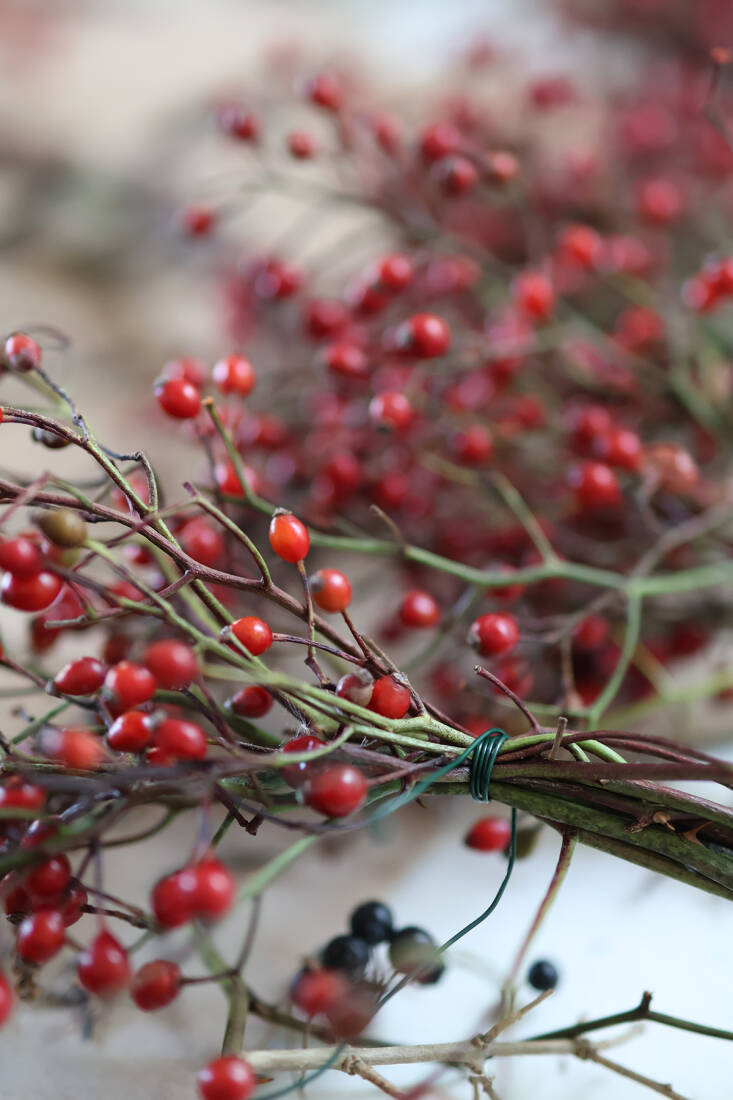

 Above: The stems of mugwort make a very good wreath frame.
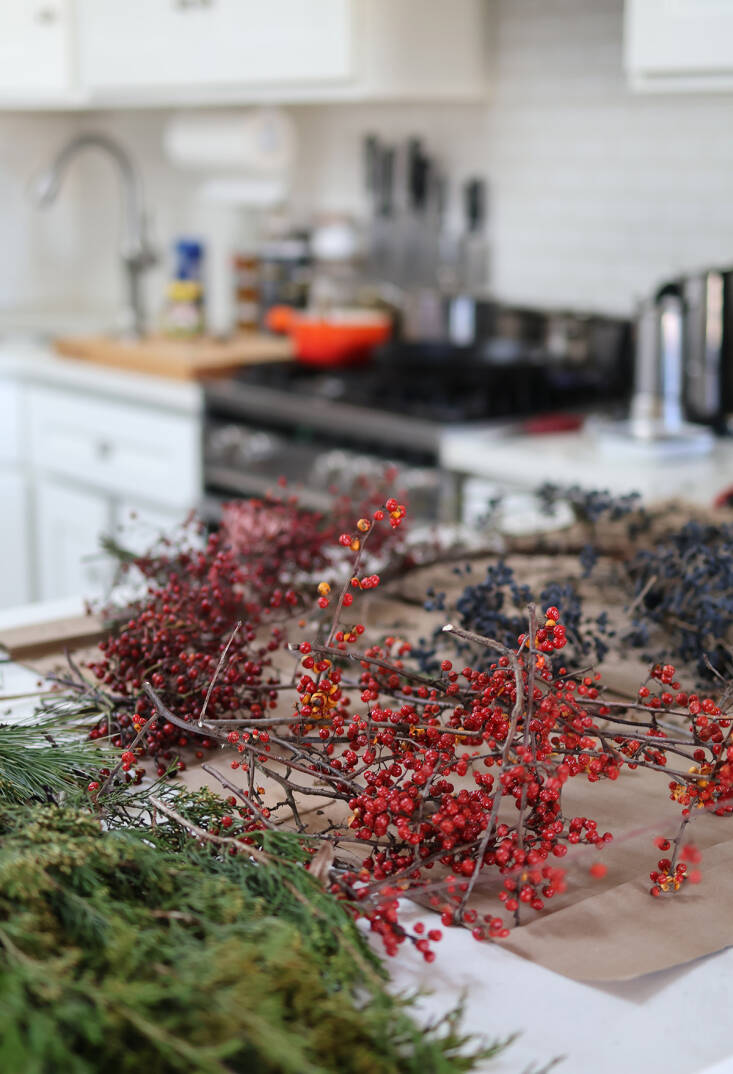 Above: Ready for crafting our 2025 wreath..
2. Make the frame.
To make a wreath, you need a base or frame to which to attach all your trimmings. Willow is ideal, and red twig dogwood works very well, too. But locally, I gather long mugwort sticks, which are abundant and, yes—again—very invasive. If the mugwort is already dry and brittle, soak it overnight in a bucket before bending the stems easily into a circlet. You need about 15 stems (20-ish inches long) to make a strong base, starting with the thicker sticks and weaving the ends into the next piece to fashion the size you want.
If necessary, florists’ wire can be looped around the mugwort circlet to strengthen the 20-inch frame. But if the stems are still green and very flexible, this is not necessary.
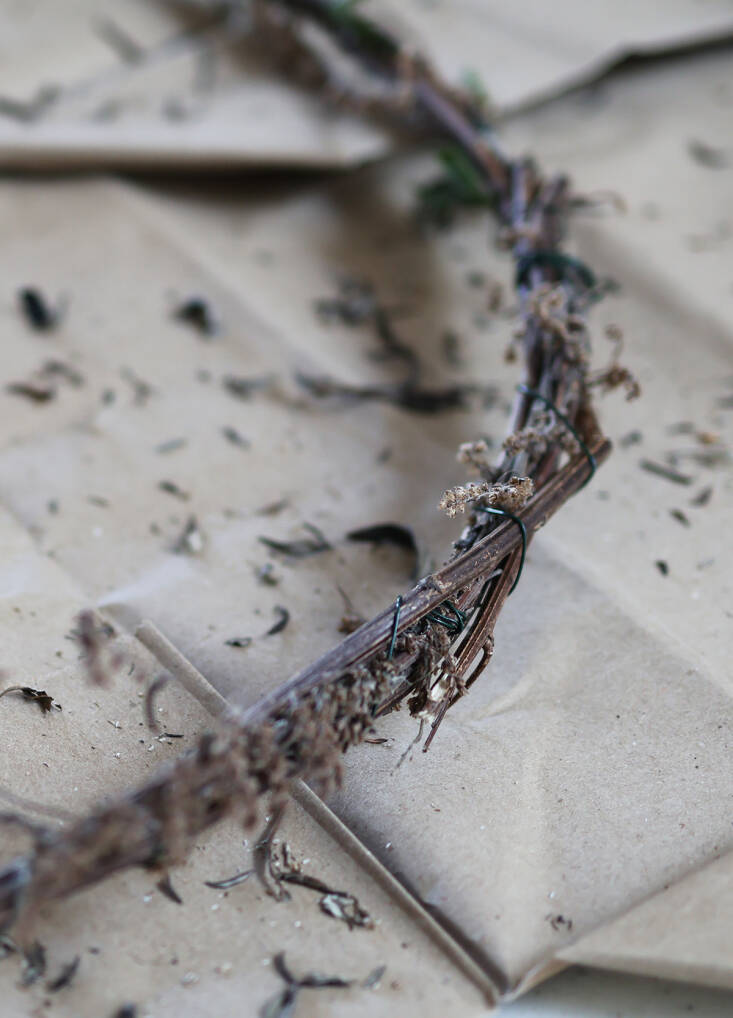 Above: Long mugwort sticks are easily woven into a circular frame, and secured if necessary with florists’ wire.
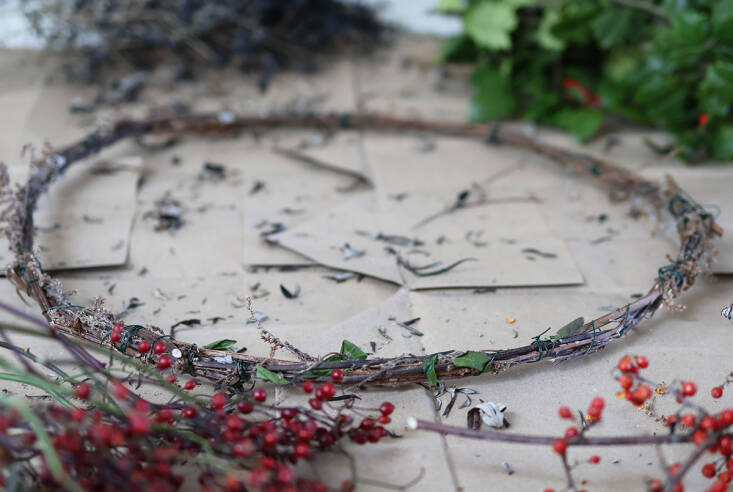 Above: The work surface is protected by re-purposed shopping bags.
3. Bundle the fixings.
Next, tie little clutches of foliage or berries. Once bundled together into little posies, you’ll secure each bundle to the wreath frame, using the floral wire.
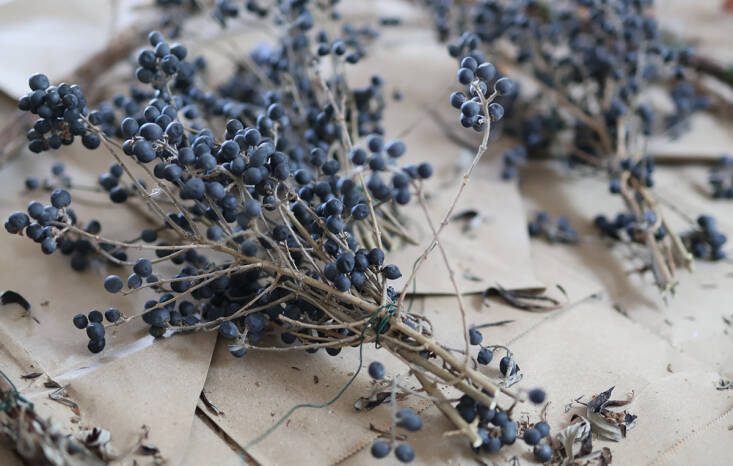 Above: Gathering berries like this privet into bundles makes them more eye-catching, once in the wreath.
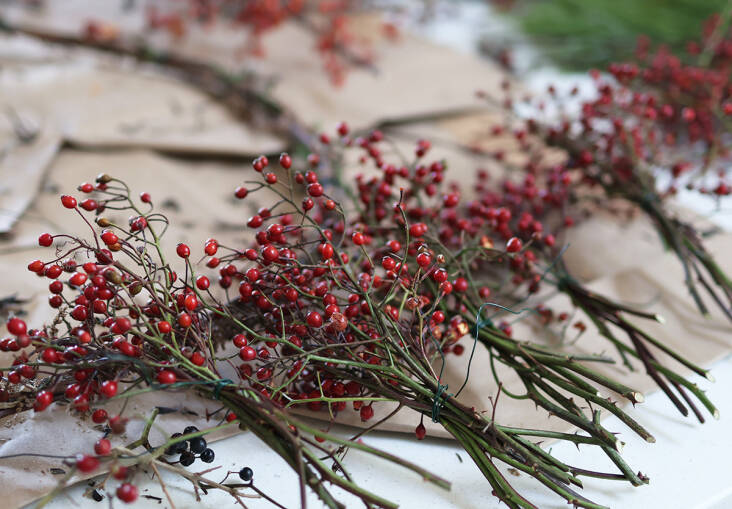 Above: Multiflora rosehips are bundled and tied.
4. Attach the bundles.
This is where your creativity comes in.
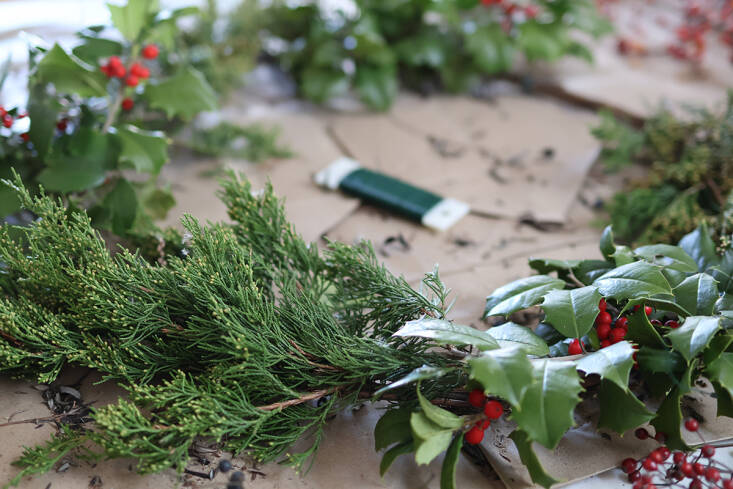 Above: I attach bundles of evergreens and berries, all facing in the same direction.
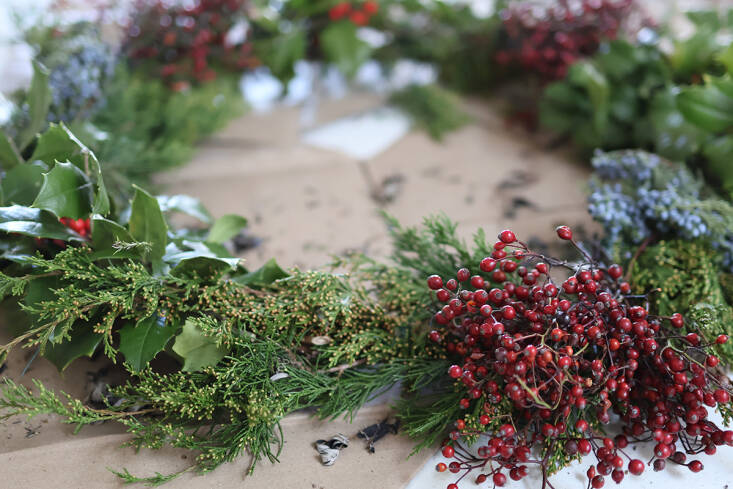 Above: As more bundles are secured to the frame, they hide the stem ends of previous additions.
Wreath Cheat Sheet
The frame can be made from:
- Mugwort
- Willow
- Osier dogwood
Evergreens can include:
- Pine
- Cedar
- Fr
- Spruce
- Juniper (eastern red cedar)
- Holly
Colors can come from:
- Rosehips
- Privet
- Juniper
- Winterberry (Ilex verticillata)
- Holly
- Virginia creeper
- Greenbrier (Smilax rotundifolia)


See also: