
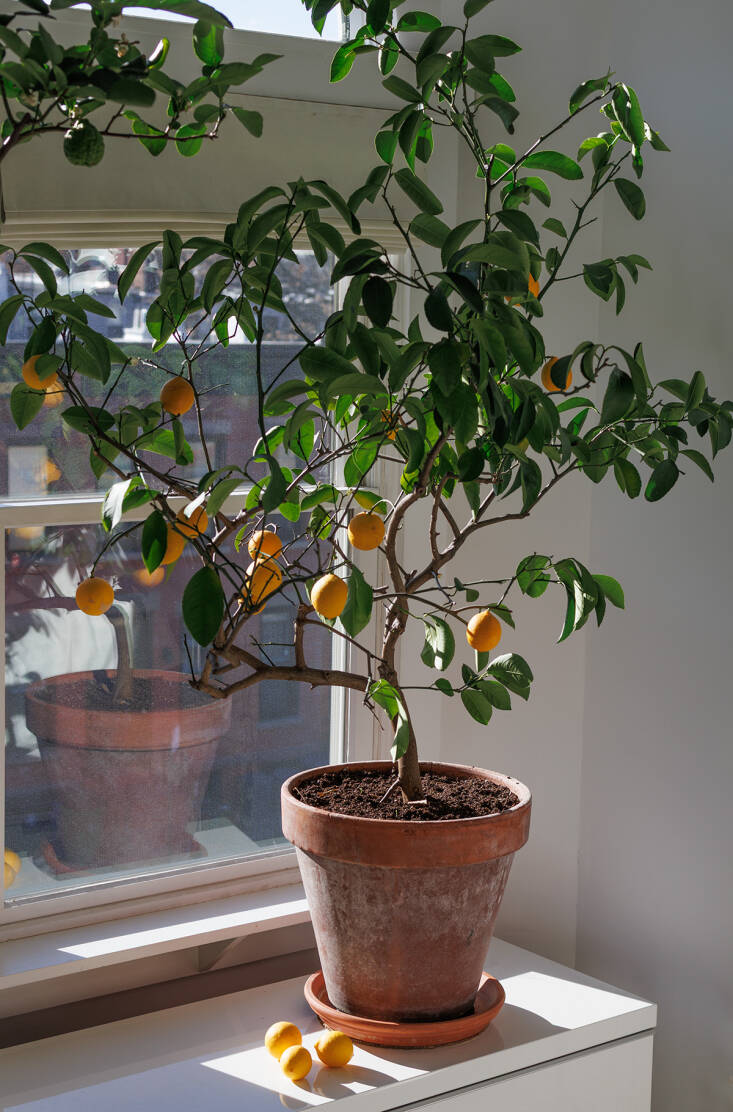
It is early winter and our Meyer lemon tree is now indoors in a sunny window, to overwinter until mid-spring. The lemons are so ripe and perfumed that we smell them the second we walk into the apartment. This year, I decided to make limoncello with their aromatic zest. It will be ready for an ice-cold toast at New Year, and its bottle will live in the freezer for next summer’s outdoor evenings. (I use the peeled lemons’ juice to add to salt preserved-lemons, but that is another story.)
Here’s how I make limoncello, using fruit that took over half a year to ripen, from blossoms that smelled like heaven seven months ago.
Above: The Meyer lemon lost some leaves late in the season, but its fruits are strongly perfumed.
Our Meyer lemon tree had a rough season outdoors, and as a result the lemons are smaller than usual. There were a couple of dry months during a very hot summer, and I also re-potted it while it was in fruit (I realized that the small tree was root-bound, which was the reason it was drinking so fast and then staying parched). I was a bad lemon parent. (But at least it wasn’t overwatered, a practice that leads to even worse long-term decline.)
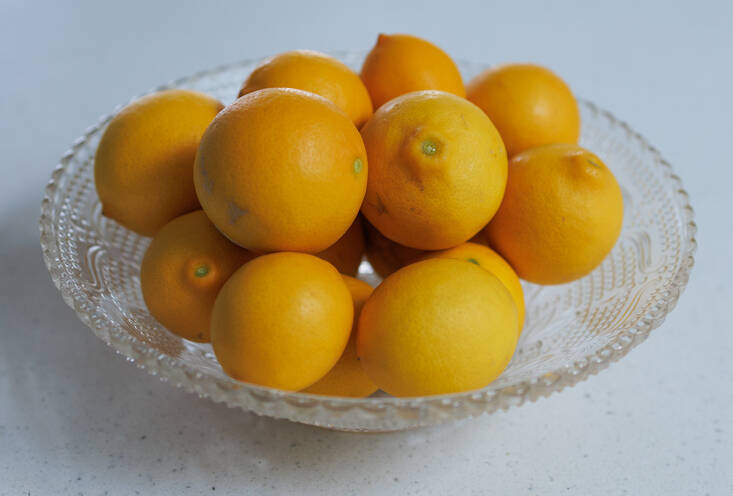 Above: Window-to-table lemons, homegrown and organic.
One of the satisfactions in growing your own citrus is knowing what is on it and in it. There are no waxy coatings on the zest and I never spray the fruit with pesticides (I do use Neem oil on the leaves to control scale insects when they appear, which they do without fail: See my story about growing indoor citrus for more care tips.)
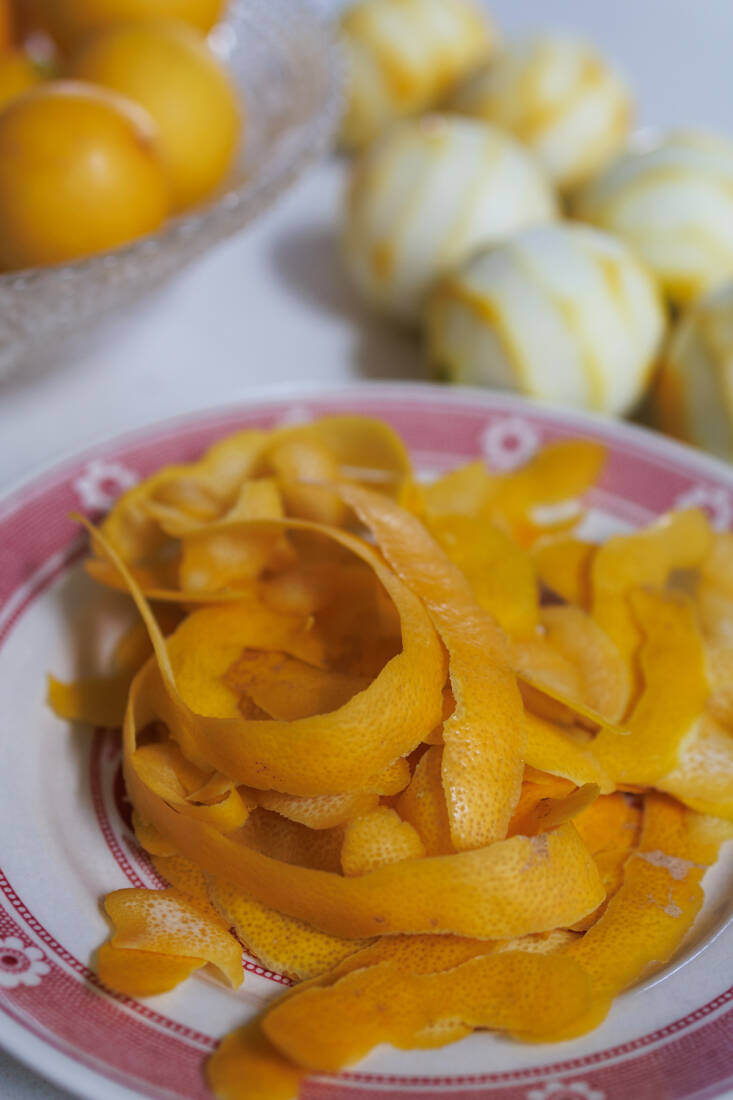 Above: For limoncello, lemon zest is soaked in hard clear liquor to extract maximum oils and flavor.
Limoncello is a Sicilian liqueur that is sipped as a digestif at the end of meals in small, cold increments. It is a simple but heady combination of lemon zest, high proof grain alcohol, water, and sugar. Many recipes call for Everclear or another super-high proof spirit, but I use a classic vodka, as well as less water in the sugar syrup that is added later.
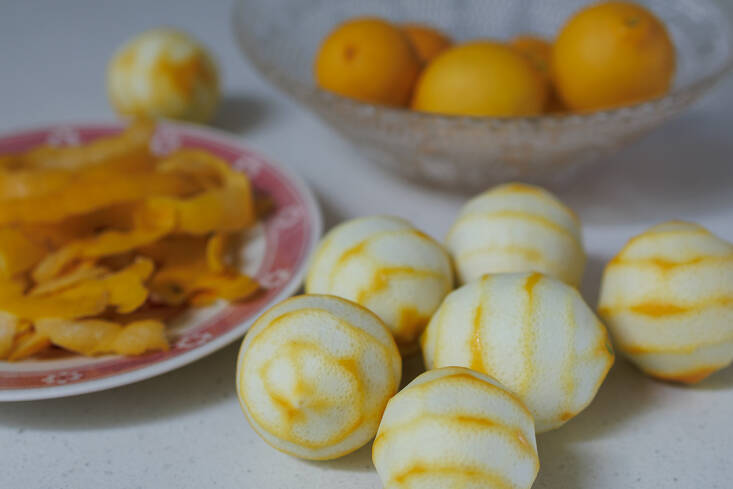 Above: My zesting with a vegetable peeler is imperfect; you could also microplane the zest.
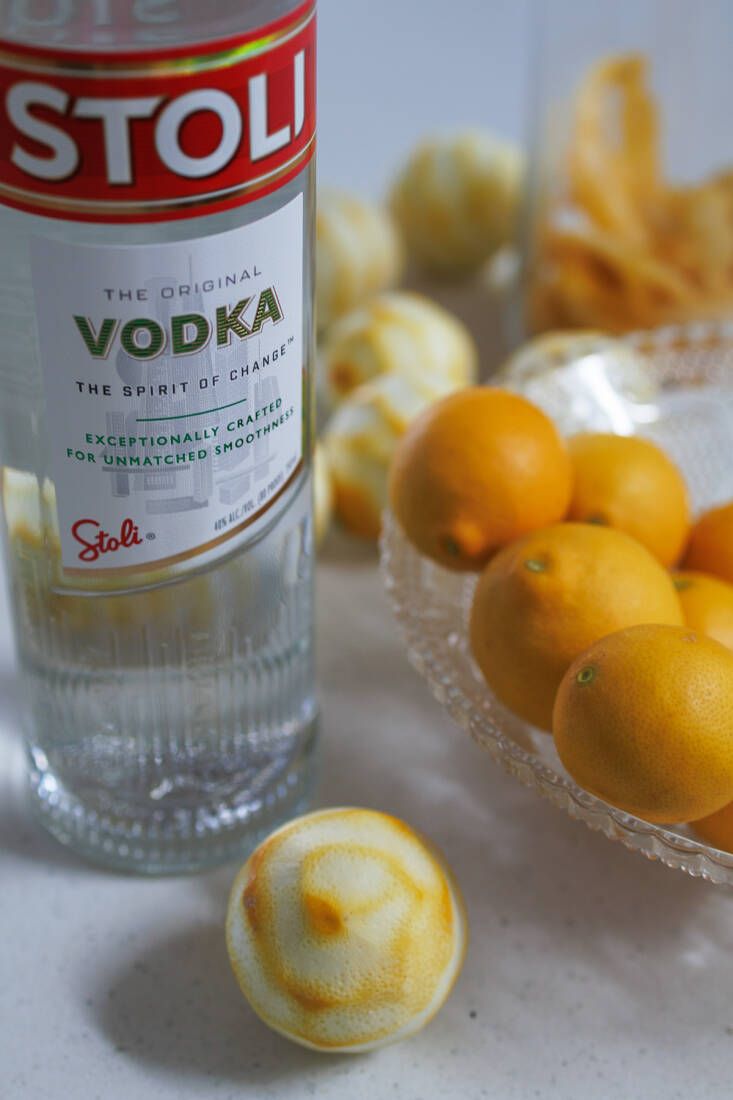 Above: That’s my neutral vodka of choice; later it is diluted with a sugar syrup.
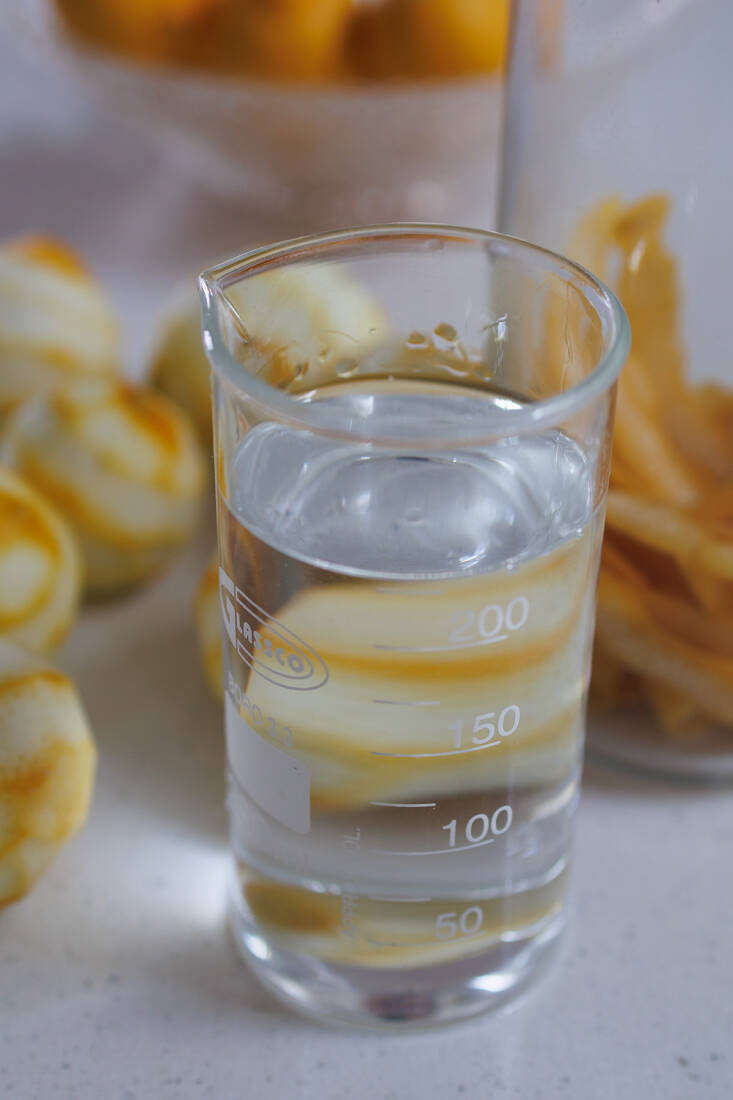 Above: I add 2 cups of vodka to the peels of seven Meyer lemons.
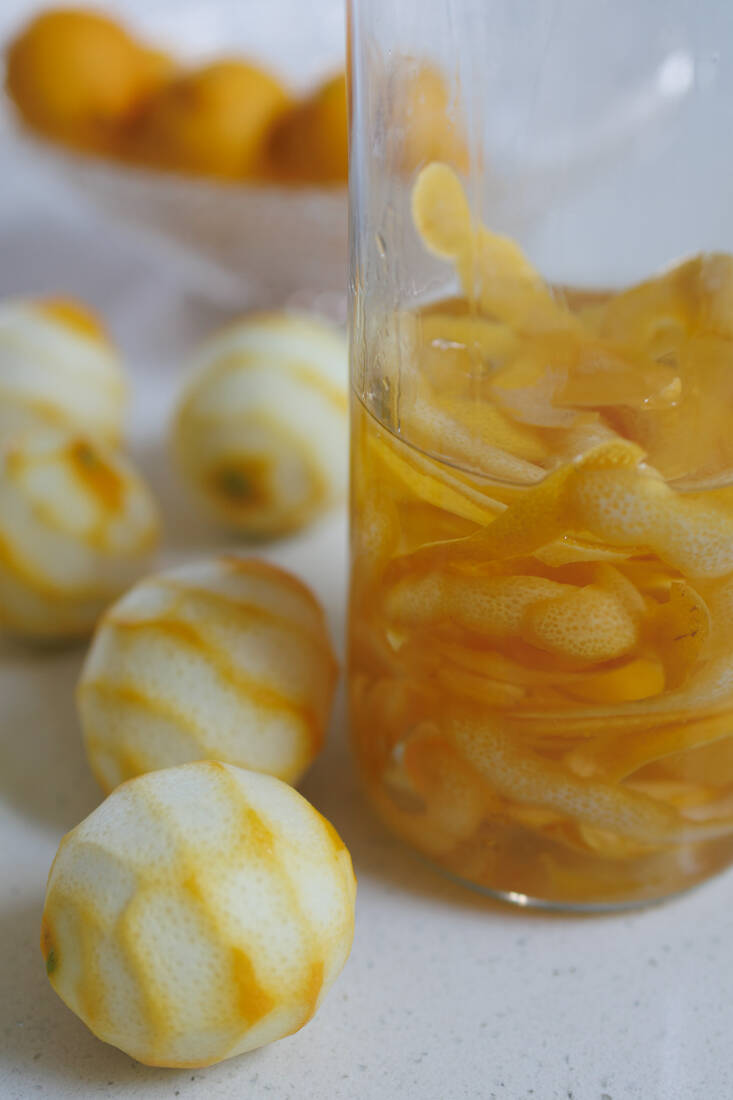 Above: The peels and vodka infuse for two weeks.
While I associate the drinking of limoncello with summer and long lunches under the shade of tall tree in a garden far away, the time to make it is now: it is citrus season. We may be used to year-round lemons at supermarkets, but if you grow your own, or relish the enjoyment of a local crop, this limoncello-making ritual is sweet (well, sweetly sour) and can be appreciated many months later.
Limoncello is also delicious added to savory roasting root vegetables, just before they come out of the oven, poured over a lemon granita or sorbet, or drizzled over a still-warm cake.
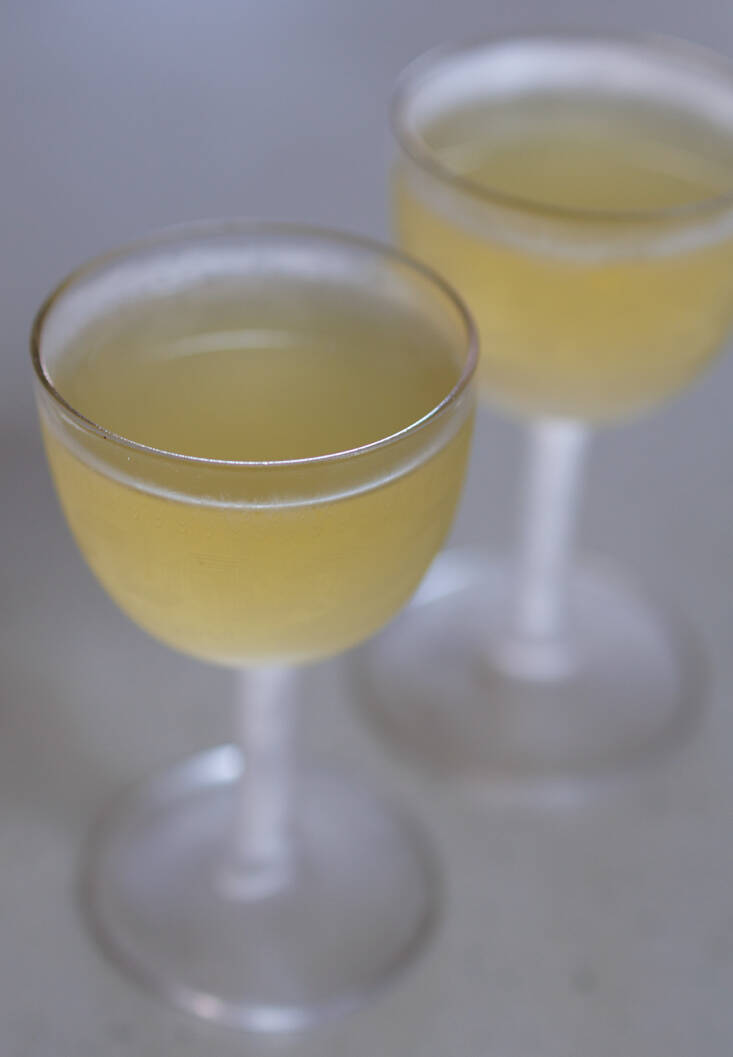 Above: Freezer-chilled limoncello in tiny, chilled glasses.
Limoncello
My recipe uses slightly less sugar than some, since I appreciate the extra, lemony kick in each mouthful. It is still plenty sweet, You may of course use another type of lemon to make the liqueuer. If they are store-bought, scrub them to remove any residues. Dry well. And if you have an excess of oranges, you can make arancello in the same way, using their zest.
- 7 Meyer lemons
- 2 cups vodka
- 7 ounces sugar
- 1 cup water
Peel or microplane the zest from the lemons, taking care to remove as little bitter pith as possible. Pour 2 cups of vodka into a clean jar and add the lemon zest. Cover, and leave out at room temperature for two weeks.
After two weeks, strain the liquid, which will now be a pale yellow. In a saucepan, mix the sugar and water and bring to a boil to make a syrup. When it is completely cool, mix it with the lemon extract. Decant into a bottle, and keep in the freezer. Serve in small, chilled glasses.
See also: